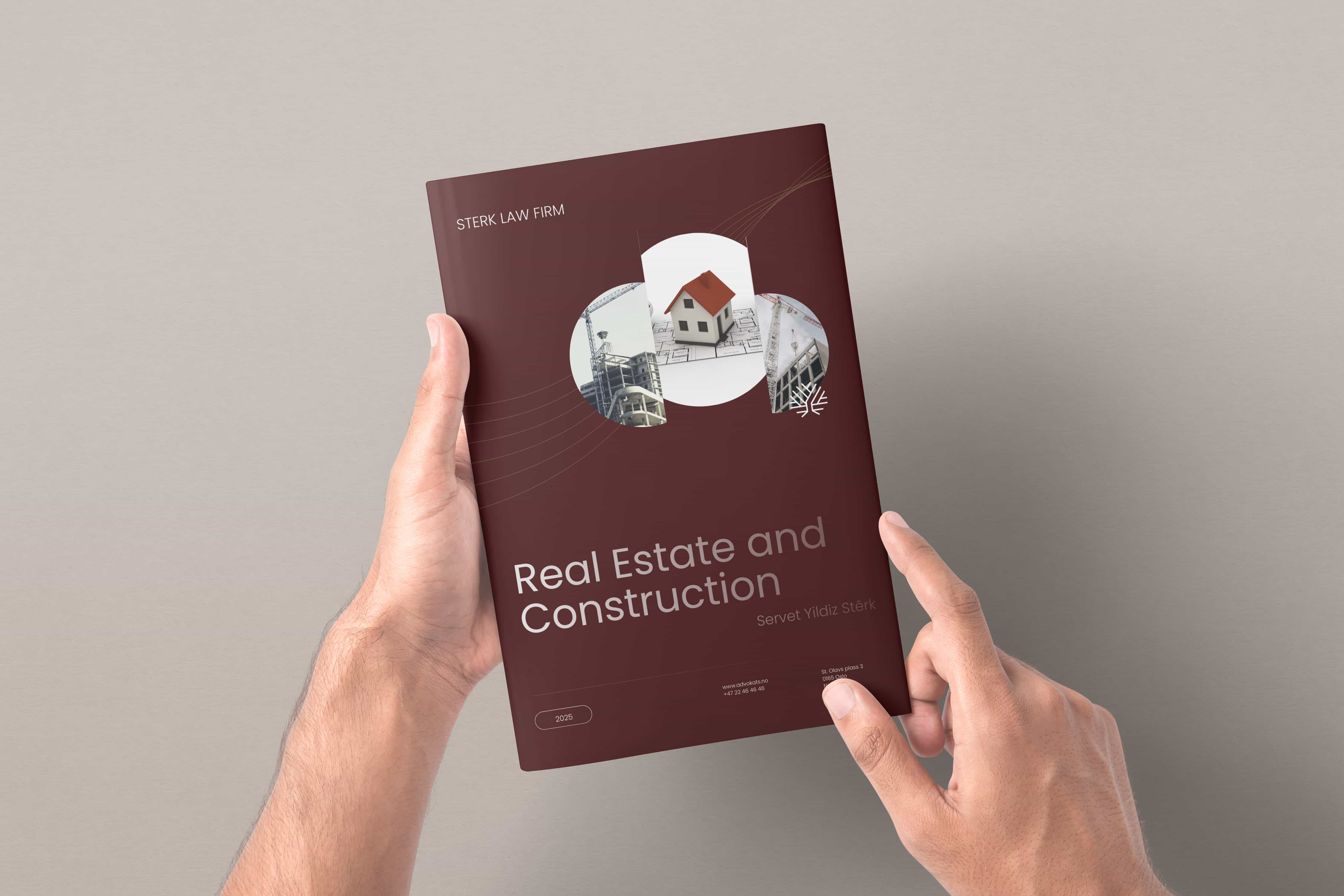

This article gives businesses and investors an overview of the main legal issues when buying, owning and leasing real estate in Norway: concession, formalities, the main legislation, ground leases, transaction structures, registration, financing, tax and commercial leases. Tax, VAT and duties change frequently, so check the current rules with Skatteetaten or your tax adviser before a transaction.
General framework
1.1 Concession and ownership
Under Section 2 of the Concession Act (konsesjonsloven), real estate cannot as a main rule be acquired without a permit (konsesjon). The same rules apply to Norwegian and foreign buyers. The Act contains many exceptions, and several of them depend on the type and size of the property (Section 4).
In practice, many acquisitions of developed properties do not require concession, while agricultural properties, forest and larger undeveloped properties are more often covered. Some leases for more than ten years are also covered (Section 3).
The Concession Act applies to acquisitions of real estate. Whether a share deal in a property-owning company is covered must be assessed in each case.
1.2 Formalities
Norwegian law does not have a general requirement that a contract for the sale of real estate must be written or notarised. An agreement may be binding once the parties have agreed on the essential terms. For that reason, professional parties often state explicitly that no binding agreement exists until the contract has been approved by the boards and signed.
In practice, real estate contracts are made in writing. Registration in the Land Register requires a written deed (see Section 2.3).
1.3 Key legislation
The Alienation Act (avhendingslova) applies to the sale of real estate (asset deals).
Share deals in property-owning companies are generally governed by the Sale of Goods Act (kjøpsloven) and the contract.
The Tenancy Act (husleieloven) applies to leases of residential and commercial premises.
Between professional parties, the Alienation Act can generally be departed from by agreement. In consumer purchases, many of its provisions cannot be departed from to the buyer’s detriment (Section 1-2 of the Alienation Act (avhendingslova)). For commercial premises, most of the Tenancy Act can be departed from by agreement, with certain exceptions (Section 1-2 of the Tenancy Act (husleieloven)).
Other relevant legislation includes the Housing Cooperatives Act, the Housing Construction Act, the Estate Agency Act, the Owner Section Act, the Mortgages and Pledges Act, the Easements Act, the Land Registration Act (tinglysingsloven) and the Ground Lease Act (tomtefesteloven). Zoning plans under the Planning and Building Act also limit how a property can be used.
1.4 Ground leases
Ground leases (tomtefeste) are common in Norway. The leaseholder leases the land and owns the buildings on it. The Ground Lease Act applies to leases of land for buildings (Section 1). It contains special protections for leases of land for homes and holiday homes, including rules on rent adjustment, extension and redemption.
Ground leases can affect the value and financing of a property. Before buying a property on leased land, review the lease agreement, the rent adjustment terms, the duration and the leaseholder’s rights at expiry.
1.5 Standard contracts
The Norwegian market uses standard contracts for asset deals, share deals and commercial leases. They are often shorter than contracts in other markets and leave more to interpretation and market practice. Foreign investors should review whether the standard contract allocates risk as expected, for example regarding warranties, limitation of liability and the buyer’s knowledge.
Acquisition of real estate
2.1 Transaction structures
There are two main structures:
Asset deals: the buyer acquires title to the property directly.
Share deals: the buyer acquires the shares in a company that owns the property.
Share deals are common for commercial real estate, especially where the company only owns the property. The structure affects tax, document duty, liability for the company’s history and due diligence.
2.2 Contract formation and due diligence
Norwegian transactions can have short offer deadlines. An offer and an acceptance can form a binding contract, so reservations should be made clearly in the offer.
Due diligence is recommended before signing. For asset deals, it typically covers the legal, technical, environmental and financial aspects of the property. For share deals, it also covers the company’s contracts, liabilities, tax position and corporate documents.
2.3 Closing and registration
Closing involves the transfer of risk, possession and payment. In a share deal, the buyer is entered in the company’s shareholder register. In an asset deal, the deed should be registered in the Land Register (grunnboken).
Registration is not a condition for acquiring title between the parties, but it gives protection against third parties and creditors. A registered right generally takes priority over rights that have not been registered at the same time or earlier (Section 20 of the Land Registration Act (tinglysingsloven)), subject to the rule on bad faith in Section 21.
2.4 Financing
Norwegian company law restricts a company’s ability to provide financial assistance, such as security, for the acquisition of its own shares or shares in its parent company (Section 8-10 of the Limited Liability Companies Act (aksjeloven)). The assistance must be within the company’s distributable funds and approved under a specific procedure. See our article on acquisition finance in Norway.
2.5 Tax, VAT and duties
The tax consequences of asset deals and share deals differ, for both the seller and the buyer. Gains on the sale of shares may be tax-exempt for corporate shareholders under the participation exemption, while gains on property sold directly are generally taxable. The rules on gains, depreciation and deferral are detailed. Obtain tax advice for the specific transaction.
On registration of a deed for real estate, document duty (dokumentavgift) is payable at a rate set annually by the Storting (Section 1 of the Document Duty Act (dokumentavgiftsloven)). Share deals do not involve registration of a deed and generally do not trigger document duty.
VAT can be complex, in particular the adjustment of input VAT deducted on investments in the property. Adjustment obligations can in some cases be transferred to the buyer by agreement, subject to formal requirements. Contact Skatteetaten or your tax adviser for the current rules.
Leasing of real estate
3.1 Legal framework
The Tenancy Act applies to both residential and commercial leases. For commercial premises, the parties can depart from most of the Act by agreement (Section 1-2), and standard contracts are widely used. Commercial leases often limit the tenant’s right to withhold rent or set off claims, transfer maintenance obligations to the tenant and restrict subletting and changes of control.
3.2 Lease terms and rent
Commercial leases are often long-term, frequently with renewal options for the tenant. Rent is usually fixed, but turnover-based rent with a minimum rent is used for some retail and restaurant premises. Tenants often pay a share of common costs, which is settled annually. Rent is often adjusted annually in line with the consumer price index (see Section 4-2 of the Tenancy Act for the statutory rule).
3.3 VAT on leases
Letting of real estate is as a rule exempt from VAT. A landlord can register voluntarily for VAT where the tenant uses the premises for VAT-liable activities, which allows deduction of input VAT and requires the landlord to charge VAT on the rent. The lease should state which party bears the VAT risk if the tenant’s use changes.
How we can help
Advokatfirmaet Sterk AS (org. no. 931 556 584, St. Olavs plass 3, 0165 Oslo, advokats.no) advises Norwegian and foreign businesses on real estate transactions, ground leases and commercial leases. If you would like us to look at your situation, you can contact us. Information about our fees is available at advokats.no/priser.
This article provides general information as of 29 October 2026 and is not legal advice for your specific situation.